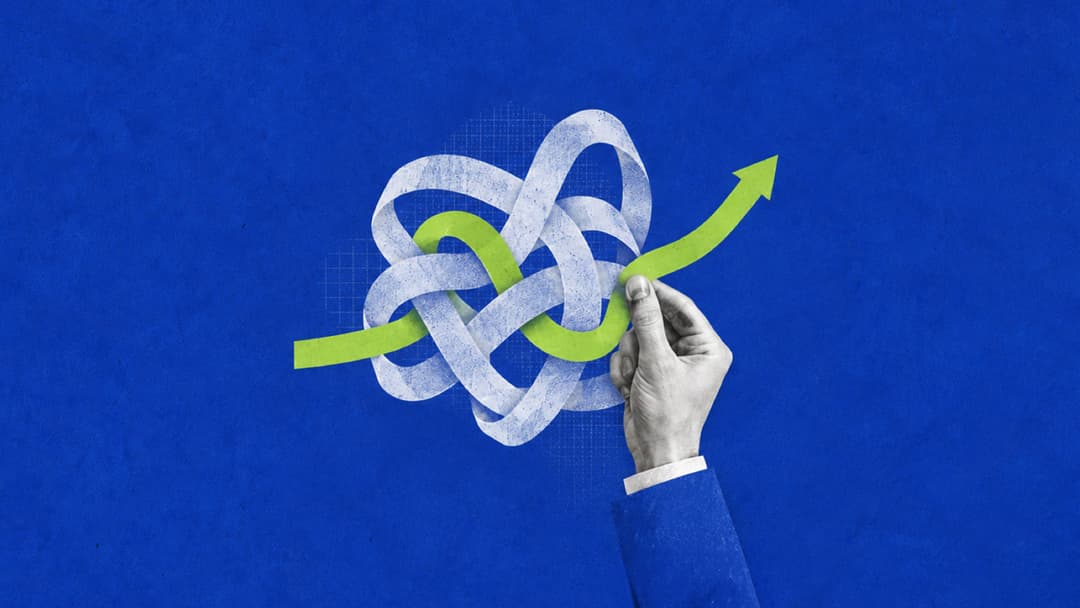
What a 1980s sitcom can teach us about loyalty.
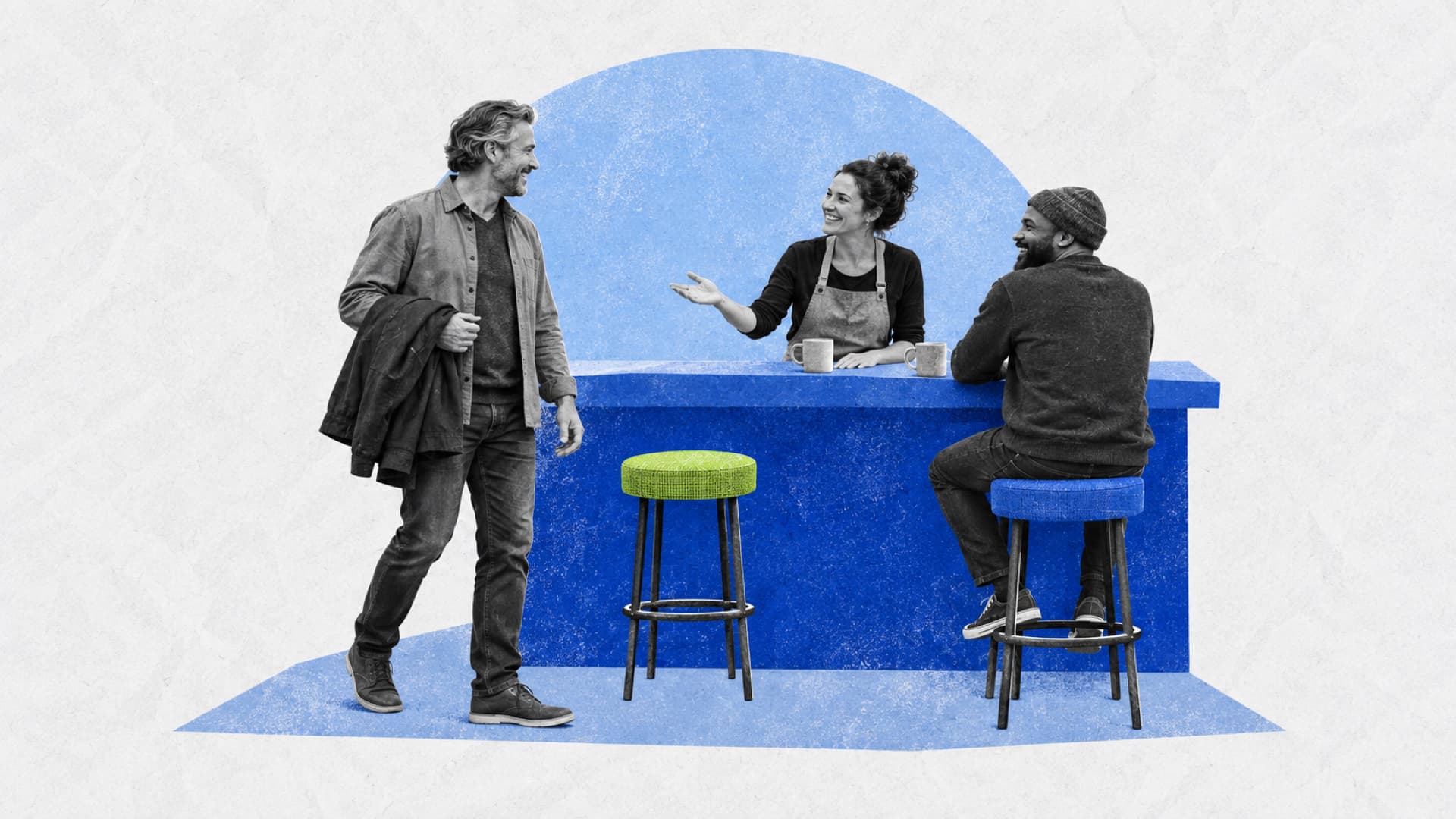
When it comes down to it, loyalty is about feeling that “everybody knows your name” – or that a brand knows you.
There‘s a reason Cheers became one of television’s most loved fictional bars. It wasn’t the beer. It certainly wasn’t a loyalty program offering discounted drinks or points for every dollar spent. People came back because Cheers was a place “where everybody knows your name”.
Norm, for example, would walk through the door and the whole bar would shout his name. Sam knew his customers. People had their favourite places to sit, their routines and their relationships. There was familiarity, recognition and belonging. A sense of community. The exact things that most brands would love to give their customers.
Of course, a neighbourhood bar in 1980s Boston is very different from a bank, hotel group or national retailer. Nobody expects the CEO to know every customer by name.
But customers haven’t stopped wanting to feel known. And there are some aspects of that kind of relationship that large-scale loyalty programs should aspire to reproduce.
That presents an interesting challenge for anyone designing a customer loyalty program: What if the program is very good at rewarding customers, but not particularly good at making them loyal?
Coffee and the beautifully designed piece of cardboard.
Let’s take a little jump forward from the ‘80s to one of the simplest reward mechanisms that exist. Long before loyalty apps, digital wallets and sophisticated customer data platforms, there was the coffee card. Buy a coffee and someone stamps the card. Fill ten spaces and your next coffee is free. It’s about as straight-forward as a loyalty program can get.
It’s also, in many respects, remarkably well designed. The proposition is instantly understandable. The reward is something you’ve already demonstrated that you value. The goal feels attainable. Your progress is visible every time another stamp is added. There are no complicated calculations or terms to understand. And when the time comes to claim the reward, redemption couldn’t be easier. Coffee cards tick many boxes of excellent program design.
And they illustrate an important point: good design isn’t necessarily complicated design. The humble coffee card contains some sound behavioural principles in a piece of cardboard that costs hardly anything.
On the other hand, it falls short in some other respects.
Imagine Cheers introducing one. Buy ten beers and get the eleventh free. It probably would have worked perfectly well. Norm would presumably have filled his rather quickly. But it wouldn’t explain why Norm kept coming back. His loyalty wasn’t to the product or its price. He was known there. His arrival was always acknowledged. His habits were familiar. He belonged.
The coffee card can’t replicate these things. It doesn’t know whether you visit every morning or once every few weeks. It doesn’t know that you always order a cappuccino with oat milk. It doesn’t know that you’ve been coming to the same café for five years. It can’t distinguish between a new customer and the person who’s spent thousands there. (Of course, the baristas might know all this – which is why training, motivating and rewarding them should be part of the program. But the mechanics of the program – the card itself – has obvious limitations.)
If the café next door starts serving better coffee at the same price, or offers a freebie after eight cups, is the promise of a free eleventh cup enough to stop you going there instead?
Moving from the transactional to the relational.
Many contemporary loyalty programs are, at their core, more sophisticated versions of that coffee card. Spend money. Earn points. Redeem them for something of value.
It’s a very good model. Financial incentives work. If customers know that choosing one business repeatedly will earn them something worthwhile, that can absolutely influence behaviour.
But there’s a limit to loyalty based entirely on that kind of transaction. If I choose you because you effectively give me 2% back, what happens when your competitor offers 3%? If the only reason to remain loyal is financial, loyalty becomes a bidding war.
This is where thoughtful design can take a program beyond simply making another transaction more rewarding. The opportunity is to make the relationship more valuable.
That doesn’t mean abandoning points, discounts or rewards. The challenge is to build something on top of them.
A transactional mechanism can give customers a rational reason to come back. But, over time, a better designed loyalty program can gradually give them other reasons, too.
From knowing your name to knowing you.
The real truth in Cheers wasn’t that everybody knew Norm’s first name. They knew Norm. They knew he was a regular. They knew where he liked to sit and what he drank. They knew his habits, his personality and enough about his life for every interaction not to begin from zero.
Technology has given large organisations something the owner of a neighbourhood bar once had naturally: the ability to know their customers. Brands can know what we buy, how frequently we buy it, which channels we use, which offers we respond to and what we tend to ignore. They can know whether we joined last week or have been customers for fifteen years. That creates extraordinary opportunities for loyalty program design.
At the same time, it also creates extraordinary opportunities to get it wrong. Imagine being a customer of a hotel group for a decade and receiving an email inviting you to “discover what makes us special”. Or being a vegetarian and repeatedly receiving offers for the steakhouse. Or phoning a contact centre as a long-standing customer, only to have your name mispronounced and be asked to explain information you’ve already provided through another channel.
Each of these interactions reveals an uncomfortable contradiction. The organisation may have enormous amounts of data about you. But it doesn’t equate to feeling that it knows you. Putting someone’s first name at the top of an email is not personalisation. Knowing something useful about them, and using that knowledge appropriately, is much closer.
This is where design matters. Technology provides the capability to know customers at scale. Good design determines whether that capability creates relevance or just more noise.
The caveat is that there’s is a boundary here too. Knowing customers better doesn’t mean demonstrating everything you know about them at every opportunity. Personalisation can quickly cross the line from useful to intrusive. The goal isn’t to make customers think, “It’s remarkable how much they know about me.” It’s to make customers feel, “They get me.”
Making regulars feel like regulars.
Nobody at Cheers interacted with every customer in exactly the same way. Norm was Norm. Cliff was Cliff. Newcomers were newcomers. There was context to each relationship.
That principle matters in loyalty too. A customer who has chosen the same company for ten years shouldn’t necessarily experience the brand in exactly the same way as someone who joined yesterday.
That doesn’t mean every long-standing customer needs a bigger discount. Recognition can take many forms. It could be a relevant benefit, a small but unexpected gesture, preferential service, communication that reflects the customer’s history rather than pretending every interaction is the first.
These moments matter because they make the relationship feel reciprocal. Many loyalty programs effectively say: Do something for us and we’ll do something for you. Buy this and earn points. Spend this amount and unlock a reward. Make another booking and qualify for the next tier.
Although, some of the most powerful loyalty moments can occur when the customer isn’t being asked to do anything at all. I know someone who bought a luxury vehicle. When the service plan expired, the dealership continued to service his car for free for several more years. Offering a surprise benefit because they’ve been a customer for years feels very different from a coupon conditional on spending another R500. Both have a financial value, but only one feels like recognition.
Good loyalty design also recognises that different customers value different things. The coffee card gets this right almost accidentally. If you buy ten coffees, it assumes that another coffee is likely to be valuable to you. At scale, things are more complicated. One customer may value discounts while others value convenience, access, choice, or an experience they wouldn’t normally buy for themselves.
Customer needs can also change over time. Someone who’s just joined a program may need an early, easily attainable benefit to understand its value. A highly engaged customer may care more about recognition or exclusivity. A customer whose engagement is declining may need an entirely different reason to return.
Thoughtful design accounts for these differences. It doesn’t just ask, “what can we give customers?” but, “what will this particular customer find valuable at this particular point in the relationship?” That is a much harder question, but a much more useful one.
There’s another lesson hiding inside both Cheers and the coffee card. They were easy. Norm never had to prove he was a regular at Cheers. He didn’t log in. He didn’t remember a membership number. He didn’t check whether his status had expired or whether he’d met the qualifying criteria for his usual seat. He walked through the door and everyone knew.
The coffee card is similarly frictionless. You hand it over. Someone stamps it. Eventually, you hand it over again and get a free coffee.
Modern loyalty programs can do infinitely more, but sophistication can introduce friction. Lengthy registration forms, confusing earning rules, points that are difficult to track, terms and conditions that require a forensic accountant. A program can offer genuinely valuable benefits and still make customers work too hard to access them. That sends its own message.
A customer who’s spent tens of thousands with a brand shouldn’t have to jump through hoops to prove they qualify for a benefit. A business can tell customers how much it values their loyalty, but if claiming a simple benefit takes twenty minutes and three phone calls, that’s not the experience the customer takes away.
Good design makes the program easy to understand, easy to use, and easy to return to.
Turning repeat business into long-term preference.
None of this means that transactional loyalty is somehow false or worthless. The coffee card works. Points work. Rewards work. They can encourage customers to return, influence where they spend, and create meaningful commercial value.
But repeat purchase is not necessarily the same as loyalty. A customer can repeatedly choose a business – or very easily choose to try a new one – because it is cheaper, closer or more rewarding.
The question to ask is: how can we design a program that turns repeat purchases into familiarity and even belonging? Do this successfully and, over time, the customer may stop consciously calculating the value of every point. They simply prefer you.
That preference is commercially powerful. It can make customers more resistant to competing offers, more willing to explore your other products, and more inclined to recommend your brand to other people.
And it can’t be created by a points formula alone. It’s designed through all the moments surrounding that formula: how quickly a new member experiences value; whether earning and redemption are intuitive; whether communications arrive at moments that matter rather than simply because the marketing calendar says they should; whether the reward proposition changes behaviour rather than merely subsidising purchases that would have happened anyway.
Individually, none of these things creates loyalty. But together, they can create a relationship that feels increasingly worth maintaining.
Which brings us back to Cheers.
Few, if any, large-scale loyalty programs can recreate a neighbourhood bar where everybody literally knows your name without even asking for it. But there is something worth learning from why that idea continues to resonate.
People like to be recognised. They like to feel understood. And they notice when a relationship feels like more than a series of transactions.
The sophistication of a loyalty program isn’t determined by the complexity of its technology or mechanics. Sometimes excellent design really is ten stamps on a piece of cardboard. The question is whether the program has been thoughtfully designed around the customer and the relationship you want to build with them.
Get our eGuide: How to design an incentive program.
This 7-part series covers the major parts of program design in short, accessible issues. Get Issue 1 now.

Are you designing rewards for convenience, choice, or connection?
Incentives work. Better-designed incentives work better.
The best intentions don’t build the best engagement.